We’re Hiring! MSW is seeking to hire a land use attorney to join our growing team

Murphy Schiller & Wilkes LLP (MSW) is currently seeking to hire an Associate in the Firm’s Land Use, Zoning, and Redevelopment practice group. The ideal candidate will possess the following:

  • 1 to 5 years of experience as a land use, zoning, and redevelopment attorney.
  • Experience preparing and filing land use applications throughout the State of New Jersey.
  • Admitted to practice law in the State of New Jersey (required).
  • Ability and desire to work one-on-one with clients.

If interested, please send a cover letter, resume, and writing sample to cmurphy@murphyllp.com.

MSW Land Use Team Secures Planning Board Approval for Restaurant in Randolph Township

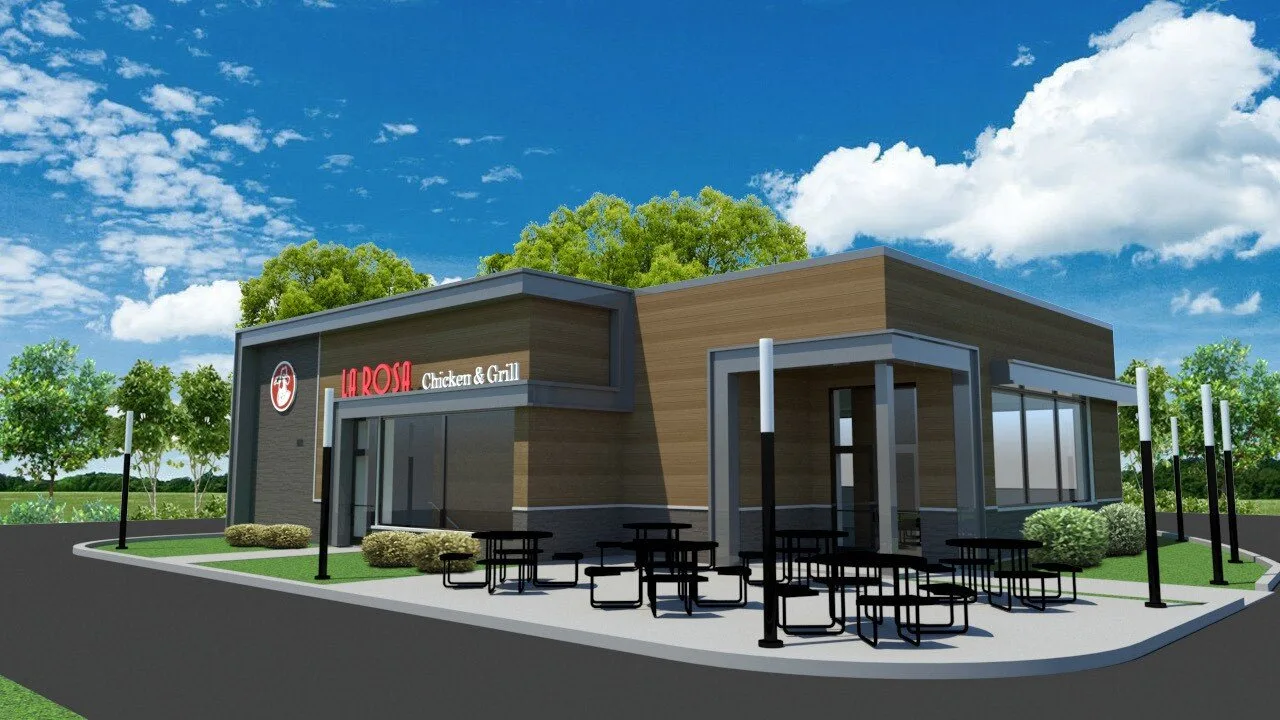
On Monday, January 25th, the Randolph Township Planning Board approved plans to permit the construction of a La Rosa Chicken & Grill restaurant in the Township’s B2 zoning district. The Board granted preliminary and final site plan approval, along with multiple variances and waivers.

Kellen F. Murphy, Esq. led the firm’s successful efforts on behalf of the development team, which included Patrick Lesbirel from Brick City Reconstruction and Michael Dipple from L2A Land Design, LLC.

IRS Extends COVID-19 Relief for Qualified Opportunity Funds and OZ Investors

On January 19, 2021, the IRS issued Notice 2021-10, which further extends relief previously granted to taxpayers, Qualified Opportunity Funds (QOFs), and Qualified Opportunity Zone Businesses (QOZBs) under the Opportunity Zone Program due to the COVID-19 pandemic under Notice 2020-39 (issued on June 4, 2020) and Notice 2020-23 (issued on April 9, 2020).

The Opportunity Zone Program provides certain tax incentives to encourage the reinvestment of capital gains derived from any source (e.g., sale of stock, sale of business assets, sale of real estate) as long-term equity investments into real estate projects and new businesses located in designated “opportunity zones.” Such investments must generally occur within a 180-day period in order to be eligible for the tax benefits afforded under the Opportunity Zone Program.

Pursuant to Notice 2021-10, if the 180-day investment period would have otherwise expired between April 1, 2020 and March 31, 2021, the deadline to re-invest the capital gains into a QOF has been extended to March 31, 2021. Thus, taxpayers who have incurred capital gains between October 4, 2019 and October 2, 2020 now have until March 31, 2021 to invest all or a portion of their capital gains into one or more QOFs in accordance with the requirements of the Opportunity Zone Program.

Additional relief afforded under Notice 2021-10 includes:

  • The automatic application of the “reasonable cause” exception to any QOF that fails to satisfy the 90% investment standard (i.e., at least 90% of the QOF’s assets must constitute “qualified opportunity zone property”) (i) during the last day of the first 6-month period of a taxable year, or (ii) the last day of a taxable year falls within the period beginning on April 1, 2020 and ending on June 30, 2021. As cash held by QOFs does not constitute “opportunity zone property,” QOFs have deadlines to purchase opportunity zone property (i.e., stock or partnership interest in a QOZB or qualified opportunity zone business property); however, under Notice 2021-10, QOFs will not be penalized in the event that they are unable to timely deploy certain cash investments to purchase qualified opportunity zone property before June 30, 2021.
  • The 30-month “substantial improvement” requirement for property held by QOFs and/or QOZBs is tolled for the period between April 1, 2020 and March 31, 2021. Thus, the deadline for developers to substantially improve certain projects in accordance with Opportunity Zone Program requirements may now be extended by up to one (1) year.
  • Unlike QOFs, QOZBs may hold certain cash assets for a period of up to 31 months due to a working capital safe harbor, subject to compliance with the Opportunity Zone Program requirements. Pursuant to Notice 2021-10, qualified QOZBs holding working capital assets intended to be covered by the working capital safe harbor before June 30, 2021, may be entitled to an additional 24 months (i.e., up to 55 months total) to deploy the working capital assets of the QOZB.
  • The Opportunity Zone Program has resulted in significant investments in numerous redevelopment projects and new businesses in opportunity zones in New Jersey and elsewhere throughout the country; however, compliance with the Opportunity Zone Program’s regulatory requirements is complex and has become that much more difficult to due to the numerous challenges created by COVID-19. MSW’s full-service commercial real estate team is prepared to assist its clients organize and form QOFs and QOZBs, evaluate and participate in opportunity zone investment opportunities, and comply with other regulatory and tax requirements in order to maximize the many benefits of the Opportunity Zone Program all while addressing the numerous other land use, transactional, environmental and regulatory challenges associated with acquiring, developing and operating real estate projects.

    For more information, please contact Matthew J. Schiller, Esq. at (973) 705-7431 or mschiller@murphyllp.com.


MSW WELCOMES JOSEPH M. VIGLIOTTI TO GROWING REAL ESTATE PRACTICE

Newark, NJ, January 12, 2020 – Murphy Schiller & Wilkes (MSW) is pleased to announce that Joseph M. Vigliotti has joined the firm as Counsel in the firm’s commercial real estate and finance practice groups.

Joseph is a highly skilled practitioner with experience representing clients in connection with the acquisition and disposition of a wide range of real estate assets, including industrial, office, retail, and multi-family properties. In addition, he represents lenders and borrowers in connection with the negotiation of mortgage and construction loans related to real estate transactions.

Prior to joining the firm, Joseph worked at top tier law firms, gaining invaluable experience representing clients throughout the region.

“We are incredibly excited to have Joe join our growing team. He is a seasoned attorney, with experience handling complex real estate and financing transactions throughout New Jersey. His experience will be instrumental in our continued commitment to providing clients with effective legal solutions,” says Kellen F. Murphy, the firm’s managing partner.

“I’m thrilled to be joining the dynamic team at Murphy Schiller & Wilkes and look forward to contributing to the firm’s future growth and success as a leader in the New Jersey and New York commercial real estate legal market,” says Joseph M. Vigliotti.

Incentive Alert: Overview of the Economic Recovery Act of 2020

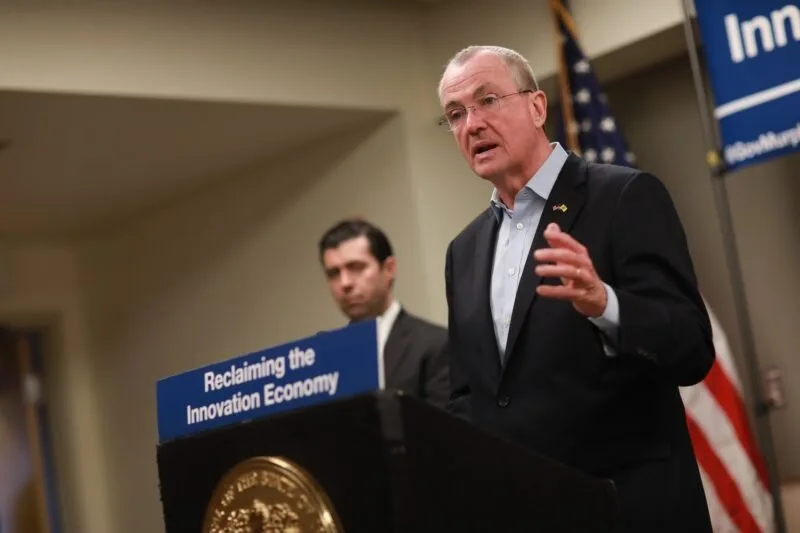
On Thursday, January 7th, Governor Phil Murphy signed into law the Economic Recovery Act of 2020 (“ERA”) – comprehensive legislation which creates multiple new incentive programs for both businesses and developers. Along with tax credits for job creation and redevelopment projects throughout New Jersey, the ERA establishes programs for the rehabilitation of historic properties, the remediation of brownfields sites, and programs related to community-anchored development, and the establishment of grocery stores in food deserts.

The programs created under the ERA will expire on March 1, 2027. They will be administered by the New Jersey Economic Development Authority (“NJEDA”) and subject to rules and regulations promulgated by the NJEDA in the coming months.

While individual projects should be fully analyzed to determine if an incentive could apply, below is some general information on the programs created under the ERA:

  • Emerge Program – the successor to Grow NJ, this program was established to encourage economic development, job creation, and the retention of significant numbers of jobs in imminent danger of leaving the State. This program will now act as the State’s main job attraction and retention program (with a particular focus on new job creation). It includes many of the same basic programmatic requirements as Grow NJ, including job minimums and capital investment minimums depending on industry, location, and the size of the applicant business. Businesses qualifying under this program will be entitled to tax credits ranging from $500 – $4,000 per job, along with bonus tax credits ranging from $250 – $5,000 per job, for a period of up to 7 years. Maximum tax credit amounts per job are subject to caps ranging from $3,000 – $8,000 depending on the project location. Tax credits are further limited by a net positive benefit test and NJEDA discretion.
  • Aspire Program – the successor to the Economic Redevelopment and Growth (ERG) Program, the Aspire Program was created to encourage redevelopment projects through the provision of incentive awards to reimburse developers for certain project financing gap costs. The program includes incentives for the development of commercial and residential projects. To qualify, applicants (developers) must demonstrate that without the incentive award, the redevelopment project is not economically feasible and that a project financing gap exists. Applicants must have an equity interest in the project of at least 20% of the total project cost. For residential projects, depending on location, applicants must demonstrate minimum project costs ranging from $5M – $17.5M. Upon project completion, the applicant is allowed a total tax credit limited to the lesser of the following: (1) 45% – 50% of the total project cost, depending on project location; (2) $32M – $50M, depending on project location; and (3) the project financing gap (and in the case of commercial projects, the net benefit test). The maximum term for commercial or mixed-use projects is 15 years. The maximum term for residential projects is 10 years.
  • Historic Property Tax Credit Program– this program was designed to help facilitate the rehabilitation of historic properties throughout the State. To qualify, applicants (developers) must demonstrate that without the tax credit, the rehabilitation project is not economically feasible, and that a project financing gap exists. Upon successful application to the NJEDA, the applicant shall be entitled to a tax credit of 40% of the cost of the rehabilitation of the qualified property.
  • Brownfields Redevelopment Tax Credit Program– this program was created to compensate developers of redevelopment projects located on brownfield sites for remediation costs. Applications under the program will be reviewed by both the NJEDA and the New Jersey Department of Environmental Protection (“NJDEP”). The applicant (developer) must demonstrate the redevelopment project is located on a brownfield site, remediation (outside of preliminary assessments and investigations) has not commenced, a project financing gap exists, and without the tax credit, the redevelopment project is not economically feasible. Projects under this program (as is the case with most projects receiving awards under the ERA) are subject to the NJEDA’s prevailing wage requirements. Upon completion (or certification) of the project, the applicant is entitled to a tax credit in an amount not to exceed 40% of the actual remediation costs, or 40% of the projected remediation costs (as set forth in the redevelopment agreement), or $4M, whichever is least.
  • Food Desert Relief Program– this program was created to provide tax credits, grants, and loans to incentivize businesses to establish and retain new supermarkets and grocery stores in food desert communities. Applicants must demonstrate that the incentive will be utilized for one or more of the following purposes: (1) to mitigate a project financing gap; (2) to mitigate the initial operating costs of the supermarket or grocery store; (3) to mitigate certain eligible equipment costs or technology costs; or (4) to support initiatives to ensure food security of residents in food desert communities. The value of the incentive award is limited based on multiple criteria. Depending on the project, applicants will be eligible for a tax credit between 20% – 40% of the total project costs, between half and all the initial operating costs, or a grant or loan in the amount of the eligible equipment costs and eligible technology costs.

In addition to the programs outlined above, the ERA creates additional programs for small businesses, including grants and loans. It also amends and extends deadlines for previous programs established under the Economic Opportunity Act of 2013.

For more information on these programs, or any other incentive programs available in New Jersey, please feel free to reach out to Chris J. Murphy, Esq. at (973) 705-7421 or via email at cmurphy@murphyllp.com.

Incentive Alert – Governor Murphy Signs $14 Billion Incentive Package

Governor Phil Murphy has signed the Economic Recovery Act of 2020, a comprehensive bill that creates multiple new incentive programs, including the Emerge Program (the successor to Grow NJ), the Aspire Program (the successor to ERG), and other programs related to brownfields redevelopment and the redevelopment of historic properties.

Real Estate NJ was first to break the news. The article can be found here: https://re-nj.com/murphy-signs-14-billion-incentive-package/

For more information on the programs created under the Economic Recovery Act of 2020, please reach out to Chris J. Murphy, Esq. at (973) 705-7421 or cmurphy@murphyllp.com.