MSW Land Use Team Secures Zoning Board Approval for Luxury Pet Hotel & Veterinary Client in Hillsborough

On Thursday, June 17th, after three virtual zoning board hearings, the Township of Hillsborough Zoning Board of Adjustment granted preliminary and final major site plan approval, along with a “D1” use variance and multiple “C” variances, in order to permit construction in connection with a K9 Resorts Luxury Pet Hotel with a veterinary clinic. K9 Resorts is an internationally recognized, multi award-winning pet care facility that offers elite pet care.

Murphy Schiller & Wilkes LLP attorney Roosevelt J. Donat, Esq. led the firm’s successful efforts on behalf of the land use team, which included Michael Ford from Van Cleef Engineering Associates, Betsy Dolan from Dolan & Dean Consulting Engineers, Michael Pilko and Robert Trego of RHJ Associates, P.C, Anthony Miele, D.V.M. of Brooklyn Veterinary Group, Tim Katsch of K9 Resorts Luxury Pet Hotel, George Wheatle Williams and Erik DeLine of Nishuane Group, Juanita Painson of New Horizon Abstract, and Luca Blessent.

For more information or questions related to New Jersey’s land use process, please feel free to contact Roosevelt J. Donat, Esq. at (973) 705-7414 or rdonat@murphyllp.com.

MSW Q&A Series – Part 4: Property Tax Appeals in the Era of COVID-19

In Part 4 of this 4-part series, Thomas S. Dolan, Esq. answers questions related to navigating New Jersey’s property tax appeal process during the COVID-19 crisis. As part of the Property Tax Appeal practice group at Murphy Schiller & Wilkes LLP (MSW), Tom represents a wide-range of clients in connection with property tax-related matters throughout New Jersey.

Q1: What effect has COVID-19 had on filing deadlines for Property Tax appeals in New Jersey?

The COVID-19 crisis has led to significant extensions to the tax appeal filing deadlines in New Jersey, providing taxpayers with additional time to file an appeal. In every other year, the strict deadline for filing a property tax appeal is either April 1 or May 1 for municipalities that have undergone a revaluation. This year, these deadlines have been extended twice due to COVID-19. As a result, the current tax appeal filing deadline for appeals is July 1, 2020, pursuant to legislation recently signed by Governor Murphy (A-4157). This will likely be the final extension of the filing deadline. We continue to get calls from taxpayers looking to appeal or challenge a tax increase. The good news is that there is still time to file this year.

Q2. Are tax appeals still being prosecuted during this time?

Cases filed in the Tax Court have generally not been delayed by the COVID-19 court closures. Tax Court Judges continue to hear motions and conference cases through video and telephone conferencing.

In contrast, cases before the County Boards of Taxation have been delayed as the County Boards have been closed to the public during this time. In a typical year, most cases filed at the County Board are heard from May through the end of July. This year, cases are delayed awaiting reopening of the County Boards. As a result, recent legislation has been passed extending the time for County Boards of Taxation to render decisions to September 30, 2020. Some counties, such as Union County, have begun to schedule video conference hearings, and we expect other counties to do start to do the same.

Despite the closures, tax assessors have been readily available to discuss resolution of tax appeals during this time. We have been able to resolve many appeals as both sides are eager to have cases ready when the County Boards open up again.

Q3: How will the economic effect of COVID-19 impact tax assessments and appeals?

Under New Jersey law, tax assessments must be based on the fair market value of the property as of October 1 of the pre-tax year. Although the economic impact of COVID-19 on the commercial real estate market is not yet fully know, it is generally expected that the market will soften and property values may decrease as a result of the crisis. Rental streams have been impacted for 2020, and vacancy rates will likely increase as businesses have shut down and are unable to pay rent. Further, new developments scheduled to be completed this year have been delayed and, once completed, may find it difficult to attract tenants, in particular for multi-family or retail spaces.  As a result, it is anticipated that many properties will be over-assessed by the end of the year and into 2021. Further, as municipalities are experiencing revenue shortfalls during this time, we may see municipalities seek to increase revenue through property taxation, further burdening taxpayers.

Q4: How can the attorneys at MSW assist taxpayers during this time?

One important way to mitigate the economic effects of any market downturn and resulting reduction in property value is to reduce your tax burden by filing a tax appeal challenging the assessment of your property. While COVID-19 may have a larger impact on assessments for 2021, it is important to determine early whether you may benefit from an appeal this year or the next. Our experienced tax appeal team can assist by providing a complementary evaluation of your property to determine if it is eligible for a tax appeal and recommend a strategy going forward.

For more information, please feel free to contact:
Thomas S. Dolan, Esq.
(973) 705-7412

tdolan@murphyllp.com

MSW Land Use Team Secures Zoning Board Approval for Multi-Family Building in Newark

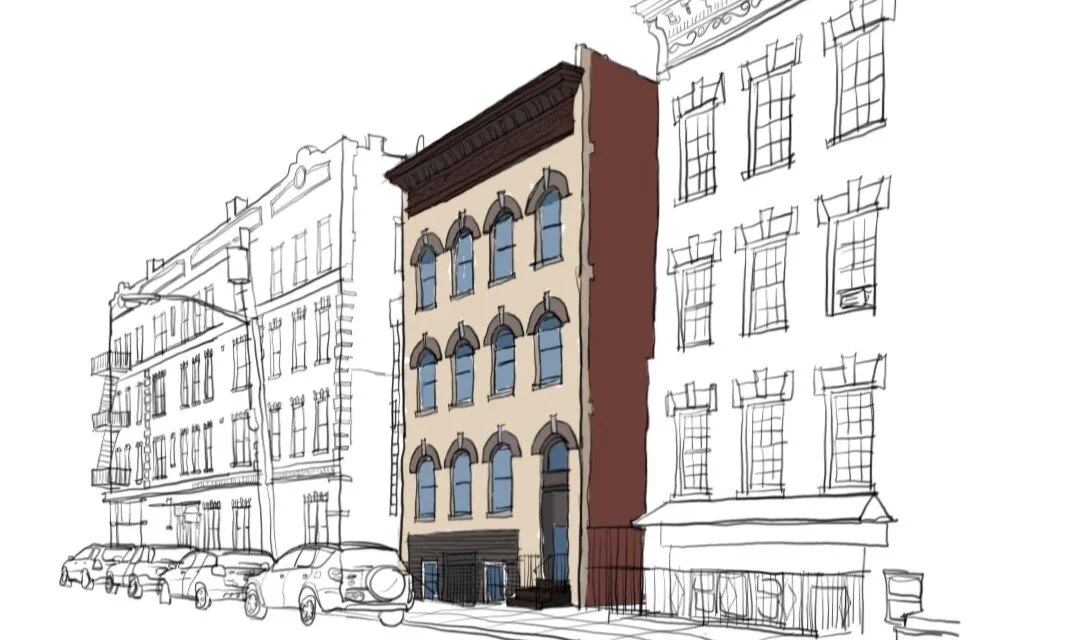
On Thursday, June 11th, the City of Newark Zoning Board of Adjustment granted preliminary and final major site plan approval, along with a “D2” and “D5” variance and multiple “C” variances, in order to permit construction in connection with a multi-family residential building in the City’s East Ward.

Chris J. Murphy, Esq. led the firm’s successful efforts on behalf of the land use team, which included Eli Meltzer and Marvin Meltzer from Meltzer/Mandl Architects P.C., and John McDonough from John McDonough Associates, LLC.

MSW Land Use Update with Roosevelt J. Donat, Esq. (June 2020) – Impacts of COVID-19 on New Jersey Real Estate Development

The novel coronavirus (COVID-19) has had a disruptive effect on every aspect of our lives, including personal relationships, our livelihoods, and business transactions, both large and small.

In New Jersey, local governments have had to contend with the challenges associated with COVID-19, as social distancing mandates have had an impact on every aspect of the economy, including construction and the municipal land use process – which have had a significant impact on both developers and contractors.

Several Executive Orders signed into law by Governor Phil Murphy have fundamentally changed the way land use practitioners in New Jersey ply their craft. Specifically, EO-103 declared a state of emergency throughout New Jersey, and EO-107, which restricted public gatherings (of any size) throughout the state and disrupted the MLUL-prescribed process for land use hearings. The extended State of Emergency associated with the COVID-19 pandemic has prevented public hearings of governing bodies, land use commissions, and planning and zoning boards.

Amid the COVID-19 public health emergency, New Jersey-based developers and contractors should keep abreast of recently promulgated land use guidance and legal guidelines that will undeniably affect the industry for the foreseeable future. Below is a summary of several legal advancements in that regard.

New Jersey Department of Community Affairs Issues Guidance for Planning Boards and Zoning Boards of Adjustment During COVID-19 Pandemic

Coupled with the Open Public Meetings Act (“OPMA”), The New Jersey Municipal Land Use Law (“MLUL”) prescribes rules associated with land use hearings. Public involvement is a cornerstone of the New Jersey land use law. However, given the current public health crisis, it is impossible and unsafe for boards to conduct in-person public meetings.

Accordingly, on April 2, 2020, to address this issue, the New Jersey Department of Community Affairs (“DCA”), through the Division of Local Government Services (“DLGS”), issued COVID-19 Operational Guidance (“DLGS Operational Guidance”) for municipal planning boards and zoning boards of adjustment for operating and holding public meetings during throughout the COVID-19 crisis. Specifically, the DLGS guidance permits boards to hold “virtual” public meetings in place of “live” in-person public meetings to ensure that critical land use business can still be conducted amid the COVID-19 crisis. The DLGS Operational Guidance emphasizes that to mitigate the impact of COVID-19, Boards should take advantage of technology, whenever possible.

Likewise, Boards are encouraged to facilitate hearings through emerging technologies such as Zoom, Facebook, YouTube, or comparable visual online platforms, with proceedings taped as in the regular course. With these recommended changes, developers and municipal representatives are starting to realize that the use of technology-enabled platforms may be a useful tool even after in-person meetings can resume. A permanent change may require an amendment to the MLUL.

Zoning Plans and Land Use Applications Amid COVID-19

The DLGS Operational Guidance has been helpful for those applicants seeking to move forward with development applications despite concerns related to the COVID-19 crisis. Nevertheless, all land use applicants are advised to proceed with tremendous caution. In every instance, land use applicants must pay particular attention to providing notice to the public with accurate and functional meeting platform details.

The DLGS Operational Guidance document notes that the statutory timeframes controlling the entire process (i.e., for application submissions, timing, and approvals) are undisturbed. Thus, the local Board must ensure that public hearings take place following the applicable timelines as well as maintain constitutionally mandated due process.

To that end, the DLGS Operational Guidance advises local Boards to consider receiving applications via the Dropbox, local website, or some similar online services that are easily available to the general public at least ten (10) days prior to any hearing it conducts. The guidance also recommends a procedure for those members of the public who lack resources to call the Board Secretary to receive a hard copy of the plans and hearing itself.

Applicants with simple and non-controversial applications (i.e., minor site plans, etc.) may enjoy a small measure of confidence that a land use Board action taken after proper legal notice and in strict adherence with DLGS Operational Guidance and the MLUL could survive an appeal. Applicants who are concerned about the possibility of their project being appealed may consider extending their Time of Decision and resume their applications when land use boards can reconvene in the standard “live” meeting format. Albeit, it is anyone’s guess when that will be.

DCA Issues Guidance Regarding Construction Inspections During COVID-19 Pandemic

The DCA has also issued guidance related to temporary modifications to its rules concerning inspections of construction projects.

The seminal points regarding DCA guidance on Construction Guidance include the following measures. Construction offices are to prioritize inspections necessary for the health and welfare of the public amid the COVID-19 pandemic. Work classified as “Minor Work” (e.g., replacement of water heaters and air conditioners, etc.) under existing DCA Regulations are currently required to obtain a final inspection. The inspection date may be deferred to a later date if contractors report the construction activity provided for in the guidance. Rough inspections for new additions can and should be performed, but no entry to the occupied home or building is required to comply with New Jersey’s social distancing requirements. Lastly, Plan Review for New Construction may be put on hold unless the job is important to combating COVID-19 if a Local Enforcement Agency office is closed.

The key takeaway for contractors and developers is that those that are still building and preforming construction work amid the statewide COVID-19 crisis must document their work as best as possible. To avoid a legal pitfall in the future, job owners and project managers must likewise ensure that their specialists and legal teams are overseeing all aspects of the construction process.

The attorneys at Murphy Schiller & Wilkes LLP are available to discuss any issues you may have in connection with seeking development approvals or permits throughout the COVID-19 health crisis.

ABOUT THE AUTHOR

Roosevelt J. Donat is a member of the Land Use, Zoning & Redevelopment team at Murphy Schiller & Wilkes LLP, a boutique law firm specializing in commercial real estate and development matters. He has extensive experience in the areas of real estate development, government relations, and public policy, in Newark and throughout New Jersey and other jurisdictions. Roosevelt formerly served as the Director of Government Relations and Strategic Planning for Brick City Development Corporation (the predecessor to the Newark Community Economic Development Corporation). In that role, he was responsible for developing the organization’s political engagement strategy with federal, state, and local elected officials, and business engagement strategy with corporations. Roosevelt also advised the organization’s department heads on the impact of proposed legislation and determined an appropriate response to that legislation. He regularly appeared before the Newark City Council and liaised with local and state officials to articulate, promote, and protect the interests of Brick City Development Corporation.

MSW Litigation Practice Group: Navigating Lease Disputes in the Era of COVID-19

A key construct taught to young transactional lawyers is that “all words on a page matter.” In other words, there is an underlying intent and purpose behind any phrase, sentence, or section in an agreement. Most often though, the majority of contract or lease provisions do not come into play and they may simply appear to be excess verbiage. However, 2020 has presented us with a series of real life situations and challenges that only law school professors would dream of, thus amplifying the importance of having adequate contracts and leases in place.

COVID-19 has presented the real estate industry with countless examples of situations in which there may be conflicting terms or conditions in a contract or lease that may not have been contemplated when the parties entered into their agreement. Moreover, the crisis has presented our industry with numerous situations in which contract or lease terms may contradict each other (or address at all), requiring the parties to ultimately work outside of the language of their underlying agreement in order to successfully resolve the matter.

COVID-19 constitutes a (hopefully) once in a generation public health crisis. Society has developed a much greater appreciation for health care workers and their businesses, which have been on the frontline of combatting this crisis. How and where their services can be safely provided also matters though.

Many medical providers offer their services in multi-tenanted, mixed use office buildings. As government restrictions continue to lift and workers begin coming back to work, will medical providers be permitted to offer testing and treatment for COVID-19 patients in these buildings given the highly contagious and deadly nature of the virus? Many leases will broadly permit medical tenants to offer “medical” or “primary care” services. However, the same leases will likely provide that the tenants cannot interfere with other tenants’ operations and cannot conduct activities that increase or would void the landlord’s insurance. In such instances, it is incumbent upon both landlords and tenants to attempt to resolve their countervailing equities (i.e., the tenant’s valid public and business interests to offer testing and treatment for COVID-19 patients vs. the landlord’s interests in protecting its building and tenants from COVID-19 exposure and liabilities).

Resolving such cases is by no means simple as there are a number of significant countervailing equities involved that were likely never contemplated when the parties entered into the lease. In such instances, reaching a mutually acceptable resolution may be extraordinarily difficult and the parties must attempt to fully understand and evaluate their numerous legal rights, obligations and potential liabilities. Accordingly, having thoughtful and practical legal counsel is key. MSW’s litigation and transactional attorneys are fully prepared to help their clients understand and evaluate these unprecedented challenges as real estate operators and users continue to re-open from the COVID-19 crisis.

MURPHY SCHILLER & WILKES LLP

MSW Attorney Elected Vice-Chair of NJSBA Real Property Trust and Estate Section

Matthew J. Schiller has been elected to serve as the Vice Chair – Real Property of the New Jersey State Bar Association’s Real Property Trust and Estate Law Section for the 2020-2021 term. Mr. Schiller has been a member of the RPTE Section’s Board of Consultors since 2012 and previously served as the Section’s Assistant Secretary – Real Property.

A fellow of the American College of Real Estate Lawyers, Matt is admitted to practice law in New Jersey, New York and Connecticut, and has considerable real estate transactional and litigation experience. He is the leader of MSW’s leasing, opportunity zone and distressed real estate practice groups.